
Introduction
Italian Ossobuco is one of those traditional dishes that perfectly represents the soul of Italian cooking. Slow-braised veal shanks simmered in a rich, aromatic sauce create a meal that feels elegant yet deeply comforting. The first time I prepared ossobuco, I was amazed by how humble ingredients transformed into such a luxurious dish with patience and gentle heat. The meat becomes incredibly tender, nearly falling off the bone, while the marrow melts into the sauce, adding unmatched richness. Traditionally served with a simple accompaniment, ossobuco is all about balance and restraint, letting the ingredients shine. I once tried making it a day ahead, and the flavor was even better the next day, proving that this is truly a dish that rewards time. Whether served for a special dinner or a relaxed weekend meal, Italian ossobuco delivers warmth, depth, and timeless appeal.
Print
Italian Ossobuco: A Classic Slow-Braised Comfort Dish
- Total Time: 2 hours 20 minutes
- Yield: 4 servings
- Diet: Halal
Description
A classic Italian braised dish featuring tender veal shanks slowly cooked with vegetables and herbs until melt-in-your-mouth soft, traditionally served with rich sauce and gremolata.
Ingredients
- 4 veal shanks (about 1.5–2 inches thick)
- 1/4 cup all-purpose flour
- 1 tsp salt
- 1/2 tsp black pepper
- 3 tbsp olive oil
- 1 small onion, finely chopped
- 1 carrot, finely chopped
- 1 celery stalk, finely chopped
- 3 cloves garlic, minced
- 1 cup crushed tomatoes
- 2 cups beef or chicken broth
- 2 bay leaves
- 1 tsp dried thyme
- 1 tsp dried oregano
- Zest of 1 lemon
- 2 tbsp fresh parsley, chopped
Instructions
- Season veal shanks with salt and black pepper, then dredge lightly in flour.
- Heat olive oil in a heavy pot or Dutch oven over medium-high heat.
- Brown veal shanks on both sides until golden. Remove and set aside.
- In the same pot, add onion, carrot, and celery; sauté until softened.
- Add garlic and cook for 30 seconds until fragrant.
- Stir in crushed tomatoes, broth, bay leaves, thyme, and oregano.
- Return veal shanks to the pot, ensuring they are partially submerged.
- Cover and simmer on low heat for 1.5–2 hours until meat is very tender.
- Mix lemon zest and parsley to make gremolata.
- Sprinkle gremolata over ossobuco before serving.
Notes
- Serve with risotto, mashed potatoes, or polenta.
- Low and slow cooking ensures tender meat.
- Gremolata adds freshness and balance to the rich sauce.
- Prep Time: 20 minutes
- Cook Time: 2 hours
- Category: Main Course
- Method: Braised
- Cuisine: Italian
Why You’ll Love This Recipe
This recipe offers deep, slow-developed flavor with minimal hands-on effort. It is perfect for make-ahead meals, ideal for entertaining, and delivers restaurant-quality results at home. The tender meat and rich sauce make it a satisfying and memorable dish.
Ingredients
(Tip: You can find the complete list of ingredients and their measurements in the recipe card below.)
Veal shanks are the centerpiece of ossobuco. Their connective tissue breaks down during slow cooking, creating tender meat and a rich, gelatinous sauce.
All-purpose flour is used to lightly coat the veal, helping achieve a golden crust and slightly thickening the sauce.
Olive oil provides a flavorful base for browning the meat and building depth.
Butter adds richness and a classic Italian touch to the braising process.
Onion contributes sweetness and body to the sauce as it softens during cooking.
Carrot adds natural sweetness and balances the savory elements.
Celery provides subtle earthiness and rounds out the aromatic base.
Garlic enhances aroma and depth without overpowering the dish.
Tomato paste adds concentration and richness, deepening the overall flavor.
Dry white wine deglazes the pan and adds acidity to balance the richness of the meat.
Beef or veal stock forms the braising liquid, keeping the meat moist and flavorful.
Bay leaf adds a gentle herbal note during slow cooking.
Fresh thyme contributes warmth and aromatic complexity.
Lemon zest brings brightness and cuts through the richness of the dish.
Fresh parsley adds a clean, fresh finish.
Salt enhances all flavors and ensures proper seasoning.
Black pepper adds mild warmth and depth.
Directions
Begin by patting the veal shanks dry and seasoning them with salt and black pepper. Lightly dredge each piece in flour, shaking off any excess.
Heat olive oil and butter in a heavy-bottomed pot over medium heat. Brown the veal shanks on both sides until golden, then remove and set aside.
In the same pot, add the onion, carrot, and celery. Cook until softened and lightly golden. Stir in the garlic and tomato paste, cooking briefly until fragrant.
Pour in the white wine, scraping the bottom of the pot to release any browned bits. Allow the wine to reduce slightly.
Return the veal shanks to the pot and add the stock, bay leaf, and thyme. The liquid should come about halfway up the meat. Cover and simmer gently on low heat for about 1½ to 2 hours, turning occasionally, until the meat is very tender.
Just before serving, stir in lemon zest and sprinkle with fresh parsley.
Equipment needed
Must-Have Tools to Get Rolling
Here’s what you’ll want to have on hand:
Silicone Spatula – Durable, heat-resistant silicone spatula perfect for mixing, scraping, and spreading. Gentle on non-stick cookware and easy to clean.
Large pot – You’ll need this to boil the whole cabbage head and soften the leaves.
large bowl –Spacious, durable large bowl ideal for mixing, serving, or food preparation. Made from sturdy material and easy to clean.
Sharp knife – For coring the cabbage and slicing out the thick stem in each leaf. A paring knife works best.
Mixing bowl – A big bowl makes it easier to combine your meat and rice filling evenly.
Cutting board – For prepping cabbage leaves and rolling them like a pro.
Full-Size Blender – is a powerful kitchen appliance for making smoothies, soups, and sauces in large batches.
3-in-1 Air Fryer – This versatile 3-in-1 air fryer offers Air Fry for healthier meals with less oil, Bake for bakery-quality desserts and treats, and Reheat to bring leftovers back to life with crispy, flavorful results
Servings and timing
This recipe serves four people. Preparation takes about 20 minutes, with a cooking time of approximately 2 hours.
Storage/reheating
Store leftovers in an airtight container in the refrigerator for up to three days. Reheat gently on the stovetop over low heat, adding a splash of stock if needed.
Variations and Customizations
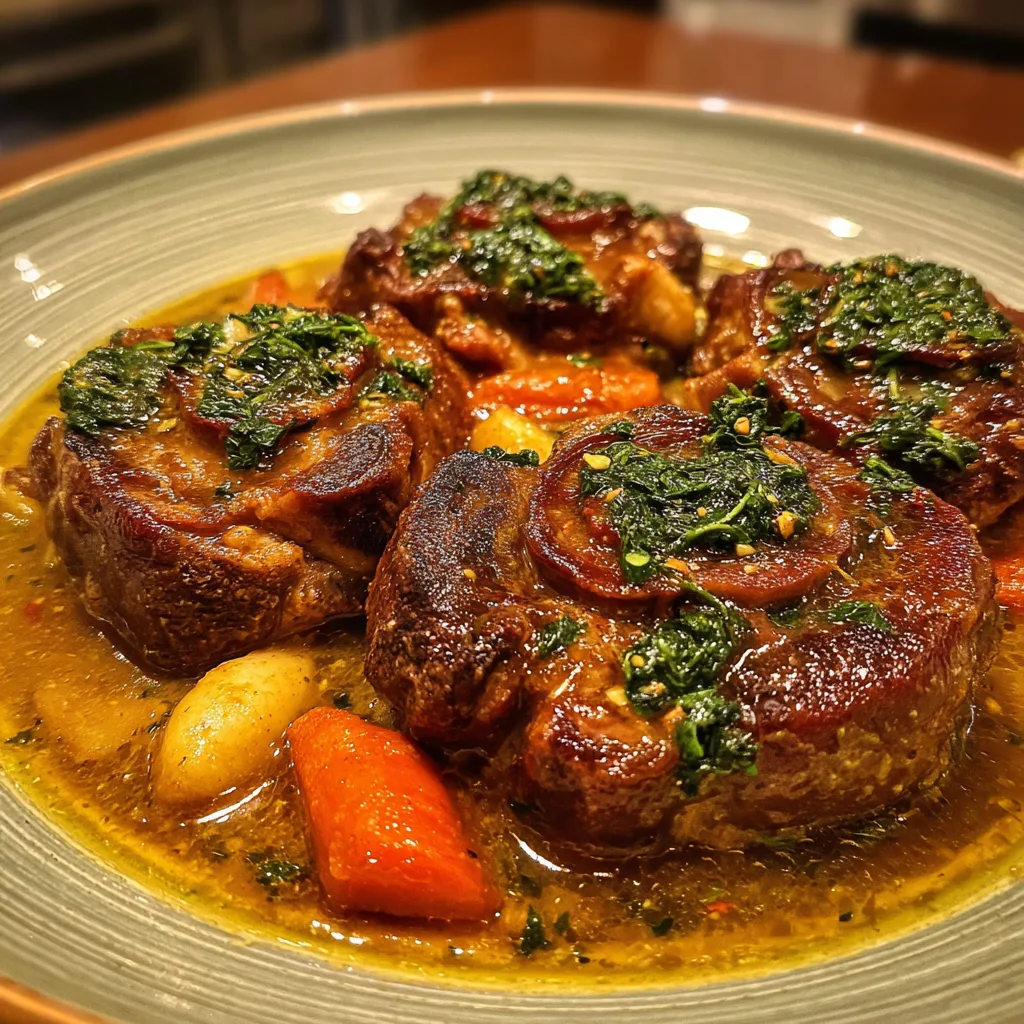
Ossobuco is flexible while remaining traditional. Beef shanks can be substituted for veal if preferred, though they require slightly longer cooking. For a richer sauce, add a small amount of crushed tomatoes. A splash of balsamic vinegar can enhance depth near the end of cooking. While gremolata is traditional, the dish can be served simply with parsley and lemon zest for a lighter finish. Ossobuco pairs well with risotto, mashed potatoes, or soft polenta, allowing the sauce to shine. Each variation respects the essence of the dish while adapting it to personal taste.
Nutrition and Dietary Info
Ossobuco is rich in protein and collagen, making it deeply satisfying. The marrow contributes healthy fats and flavor. Using moderate portions balances its richness within a well-rounded meal.
Expert Tips & Customizations
Proper Browning
Brown the veal well to develop deep flavor.
Low and Slow
Keep the heat gentle to avoid tough meat.
Flavor Development
Prepare the dish a day ahead for improved taste.
Balanced Finish
Do not skip the lemon zest, as it brightens the entire dish.
FAQs
What does ossobuco mean?
It translates to “bone with a hole,” referring to the marrow bone.
Can I use beef instead of veal?
Yes, beef shanks work well with longer cooking.
Do I need to tie the shanks?
Tying helps keep the meat intact but is optional.
Is ossobuco gluten-free?
Yes, if flour is replaced with a gluten-free alternative.
Can I make this in the oven?
Yes, braise at low temperature after stovetop preparation.
What should I serve with ossobuco?
Risotto, polenta, or mashed potatoes pair well.
Can I freeze ossobuco?
Yes, freeze fully cooked and cooled portions.
Why is marrow important?
It adds richness and depth to the sauce.
How do I know it is done?
The meat should be fork-tender and easy to pull apart.
Can I omit the wine?
Yes, replace it with additional stock if needed.
Conclusion
Italian Ossobuco is a timeless dish that showcases the beauty of slow cooking and simple ingredients. With tender meat, a deeply flavorful sauce, and a comforting aroma, it is a recipe that feels both traditional and special. Perfect for relaxed gatherings or meaningful meals, ossobuco remains a classic worth mastering in every kitchen.
Hungry for more? Visit our website for full recipes and follow us on Pinterest for daily foodie inspo you’ll love to pin!