
Introduction
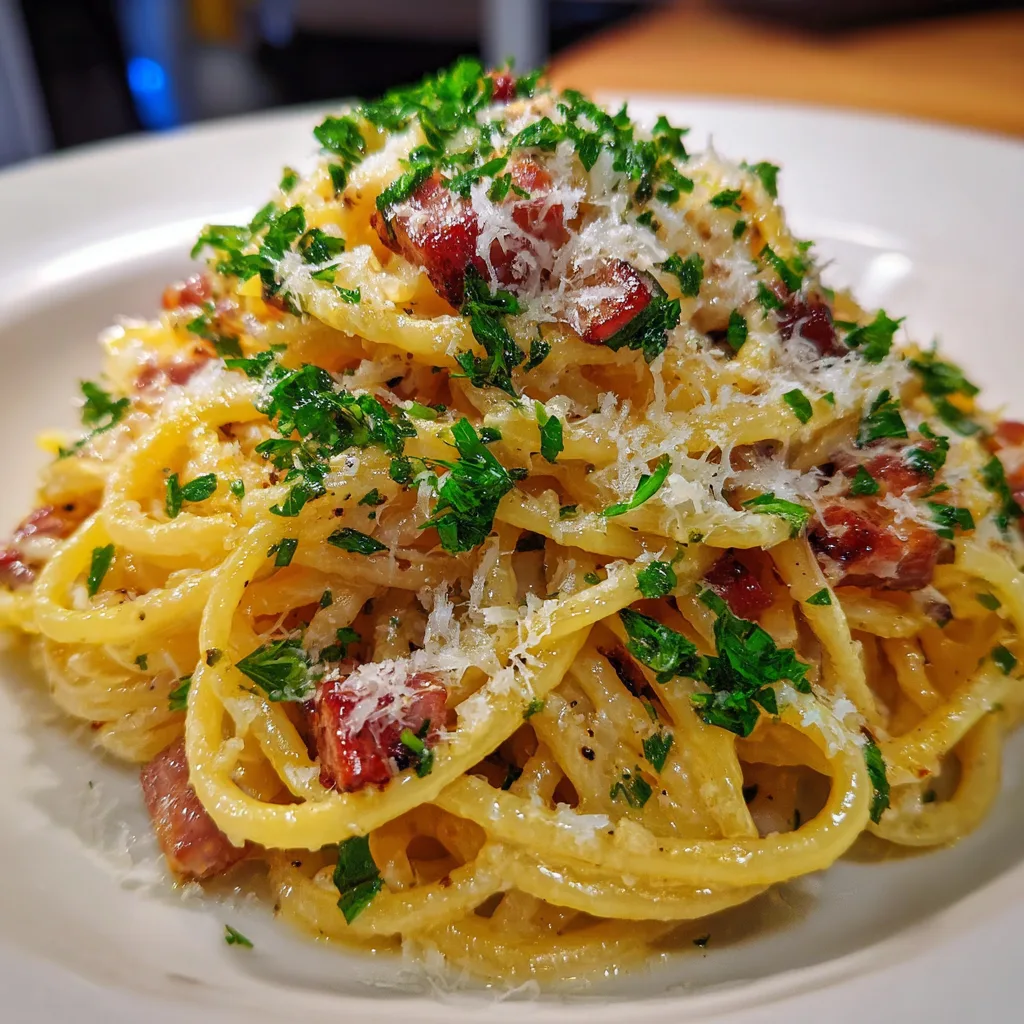
Traditional Spaghetti Carbonara is a timeless Italian dish that proves simplicity can be incredibly powerful. Made with just a handful of ingredients, this classic pasta relies on technique rather than heavy sauces to create its signature creamy texture. There is no cream involved in authentic carbonara; instead, eggs, cheese, and pasta water come together to form a silky coating that clings perfectly to the spaghetti. When I first mastered this recipe, the transformation of such basic ingredients into something so luxurious was genuinely satisfying.
Carbonara is ideal for quick dinners that still feel refined. It comes together in minutes, yet delivers depth of flavor from cured pork, sharp cheese, and freshly cracked black pepper. I have prepared this dish countless times, and once you understand the timing, it becomes a reliable go-to meal that never feels boring. This is Italian comfort food at its most honest and rewarding.
Traditional Spaghetti Carbonara
- Total Time: 25 minutes
- Yield: 4 servings
- Diet: Low Lactose
Description
A classic Italian pasta dish made with spaghetti, crispy guanciale, eggs, Pecorino Romano cheese, and black pepper, creating a rich and silky sauce without any cream.
Ingredients
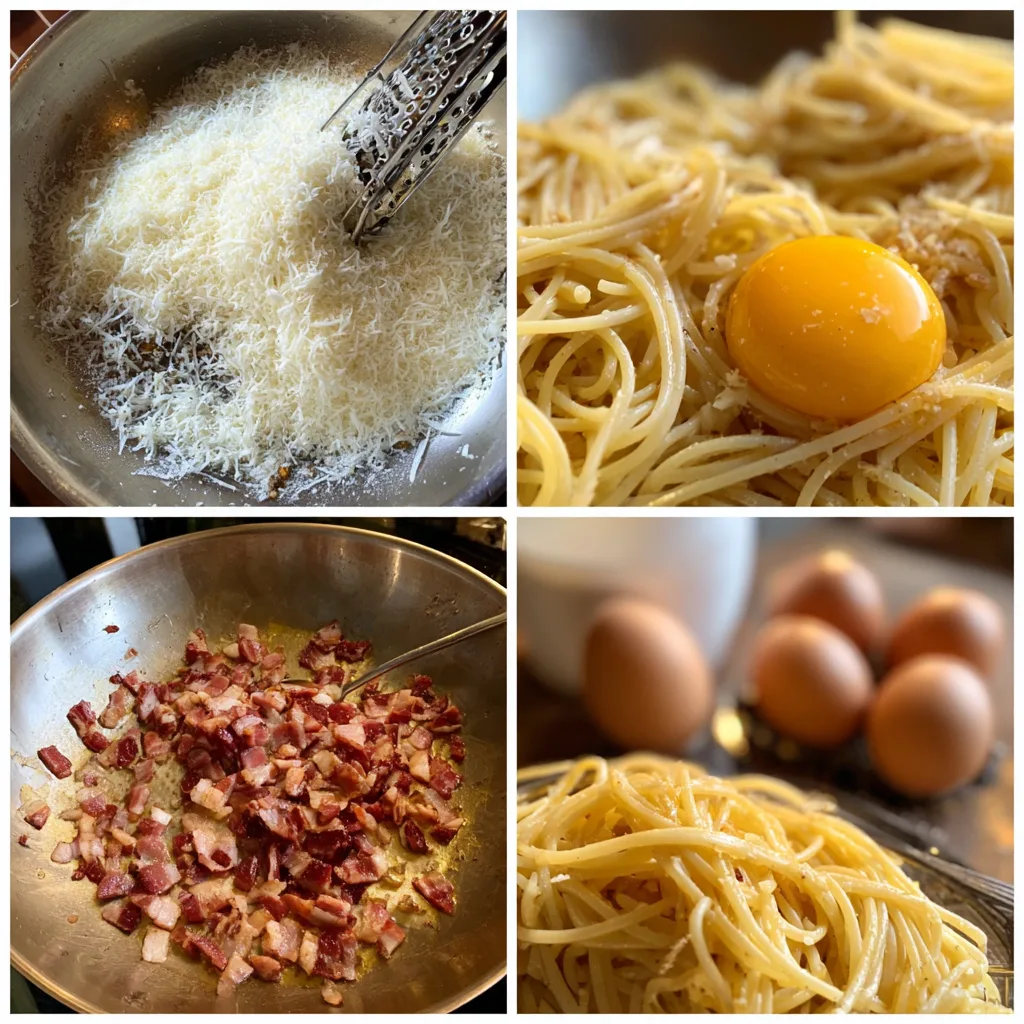
- 12 oz (340 g) spaghetti
- 4 oz (115 g) guanciale, diced (or pancetta)
- 3 large eggs
- 1 large egg yolk
- 1 cup finely grated Pecorino Romano cheese
- 1 tsp freshly ground black pepper
- Salt, for pasta water
Instructions
- Bring a large pot of salted water to a boil and cook the spaghetti until al dente.
- While the pasta cooks, place guanciale in a skillet over medium heat and cook until crispy. Remove from heat.
- In a bowl, whisk together eggs, egg yolk, grated Pecorino Romano, and black pepper.
- Reserve 1 cup of pasta cooking water, then drain the spaghetti.
- Add the hot spaghetti to the skillet with the guanciale and toss to coat.
- Remove the skillet from heat and quickly stir in the egg and cheese mixture.
- Add a splash of reserved pasta water as needed, tossing continuously to create a creamy sauce.
- Serve immediately with extra Pecorino Romano and black pepper.
Notes
- Do not add cream—creaminess comes from eggs and cheese.
- Work off the heat to prevent scrambling the eggs.
- Guanciale is traditional, but pancetta can be substituted.
- Prep Time: 10 minutes
- Cook Time: 15 minutes
- Category: Main Course
- Method: Stovetop
- Cuisine: Italian
Why You’ll Love This Recipe
This recipe is authentic, rich, and deeply satisfying without being heavy. It uses minimal ingredients, cooks quickly, and delivers restaurant-quality results at home. The creamy texture comes naturally from eggs and cheese, making it both traditional and elegant.
Ingredients
(Tip: You can find the complete list of ingredients and their measurements in the recipe card below.)
Spaghetti
Spaghetti is the traditional pasta used for carbonara, allowing the sauce to coat each strand evenly.
Guanciale
Guanciale, cured pork cheek, provides rich flavor and rendered fat that forms the base of the sauce.
Egg yolks
Egg yolks create the creamy texture of the sauce without the need for cream.
Pecorino Romano cheese
Pecorino Romano adds sharp, salty depth that defines authentic carbonara.
Black pepper
Freshly cracked black pepper adds heat and aromatic balance.
Salt
Salt is used sparingly, mainly to season the pasta water.
Directions
Bring a large pot of well-salted water to a boil and cook the spaghetti until al dente. Reserve a cup of pasta water before draining. While the pasta cooks, cut the guanciale into small strips and place it in a cold skillet. Cook over medium heat until the fat renders and the meat becomes crisp. Remove the skillet from heat.
In a bowl, whisk together the egg yolks, finely grated Pecorino Romano, and a generous amount of freshly cracked black pepper until smooth. Add the hot drained pasta directly to the skillet with the guanciale and toss to coat in the rendered fat. Allow it to cool slightly for about 30 seconds.
Pour the egg and cheese mixture over the pasta, tossing quickly and continuously. Add reserved pasta water a little at a time until a creamy, glossy sauce forms that coats the spaghetti evenly. Serve immediately with extra cheese and black pepper.
Equipment needed :
Must-Have Tools to Get Rolling
Here’s what you’ll want to have on hand:
Silicone Spatula – Durable, heat-resistant silicone spatula perfect for mixing, scraping, and spreading. Gentle on non-stick cookware and easy to clean.
Large pot – You’ll need this to boil the whole cabbage head and soften the leaves.
large bowl –Spacious, durable large bowl ideal for mixing, serving, or food preparation. Made from sturdy material and easy to clean.
Sharp knife – For coring the cabbage and slicing out the thick stem in each leaf. A paring knife works best.
Mixing bowl – A big bowl makes it easier to combine your meat and rice filling evenly.
Cutting board – For prepping cabbage leaves and rolling them like a pro.
Full-Size Blender – is a powerful kitchen appliance for making smoothies, soups, and sauces in large batches.
3-in-1 Air Fryer – This versatile 3-in-1 air fryer offers Air Fry for healthier meals with less oil, Bake for bakery-quality desserts and treats, and Reheat to bring leftovers back to life with crispy, flavorful results
Servings and timing
This recipe serves 4 people. Preparation time is approximately 10 minutes, and cooking time is about 15 minutes, for a total time of 25 minutes.
Storage/reheating
Carbonara is best enjoyed immediately. If necessary, store leftovers in the refrigerator for up to one day and reheat gently with a splash of water, though the texture will not be as creamy.
Variations and Customizations
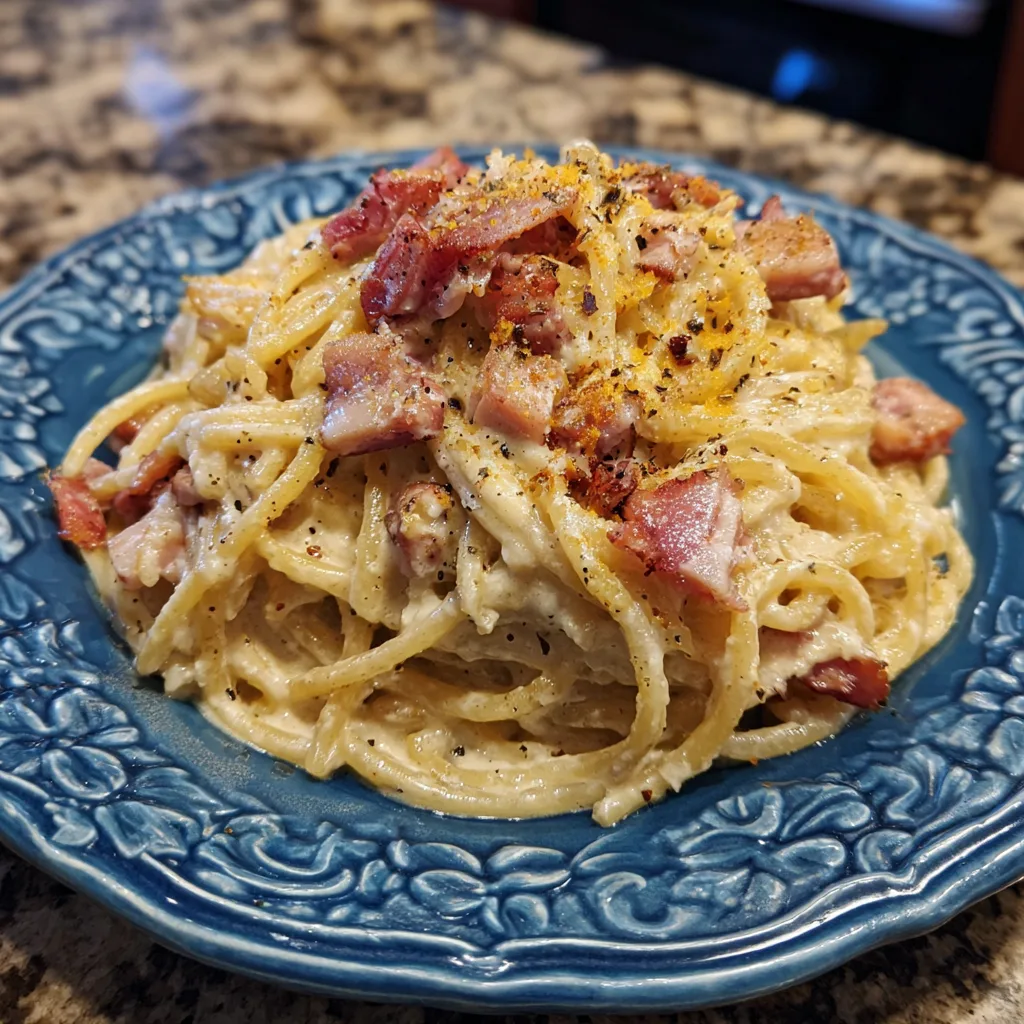
While traditional carbonara is strict in its ingredients, small adjustments are sometimes made at home. Pancetta can be used if guanciale is unavailable, though the flavor will be slightly less rich. Parmesan can replace part of the Pecorino Romano for a milder taste, but the dish will be less sharp.
Adding garlic, onions, or cream is not traditional, but some prefer these variations. I tested a version using half Pecorino and half Parmigiano-Reggiano, and it produced a slightly softer flavor while still remaining satisfying.
The key to any variation is maintaining the egg-based sauce technique rather than relying on cream.
Nutrition and Dietary Info
| Nutrient | Per Serving |
|---|---|
| Calories | 520 |
| Protein (g) | 22 |
| Carbs (g) | 58 |
| Fat (g) | 22 |
| Saturated Fat (g) | 9 |
| Fiber (g) | 3 |
| Sugar (g) | 2 |
| Sodium (mg) | 720 |
Expert Tips & Customizations
Control the heat
Excess heat can scramble the eggs instead of creating a sauce.
Use pasta water wisely
Pasta water helps emulsify the sauce smoothly.
Work quickly
Timing is essential for perfect carbonara texture.
FAQs
Is cream used in traditional carbonara?
No, authentic carbonara relies on eggs and cheese only.
Can I use bacon instead of guanciale?
It is not traditional, but it can be used in a pinch.
Why did my sauce scramble?
The pan was too hot when the eggs were added.
What cheese is traditionally used?
Pecorino Romano is the traditional choice.
Can I make carbonara ahead of time?
No, it is best served immediately.
Is carbonara spicy?
The heat comes from black pepper, not chili.
Conclusion
Traditional Spaghetti Carbonara is a masterclass in simplicity and technique. With just a few quality ingredients and careful timing, it delivers a creamy, savory pasta dish that remains one of the most beloved classics of Italian cuisine.
Hungry for more? Visit our website for full recipes and follow us on Pinterest for daily foodie inspo you’ll love to pin!